
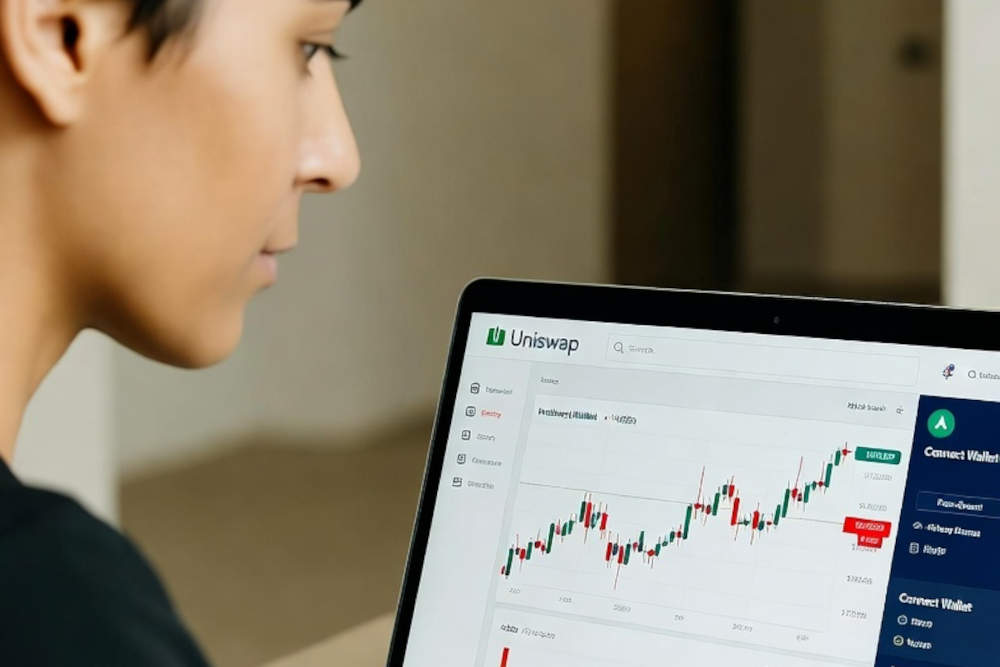
Investir dans les cryptomonnaies au bon moment peut s'avérer complexe. Bien que les tendances historiques montrent que la période octobre-novembre est souvent performante (parfois appelée « saison des cryptomonnaies »), les gains ne sont pas garantis chaque année. Voici une analyse détaillée pour vous aider à y voir plus clair :
1. Tendance historique ne rime pas avec certitude
-
Le marché des cryptomonnaies a montré une tendance à la hausse au quatrième trimestre, mais certaines années sont stables, voire en baisse.
-
S'inspirer de l'histoire est utile, mais ce n'est pas une boule de cristal.
2. Acheter maintenant ou attendre
-
Acheter maintenant :
-
Vous pourriez assister à une partie du rassemblement saisonnier.
-
Mais les prix pourraient tout de même baisser (surtout en cas de restructuration du marché).
-
-
En attendant de se baigner :
-
Je pourrais vous proposer un meilleur prix d'entrée.
-
Mais vous risquez de rater la reprise si les prix augmentent rapidement.
-
3. Moyenne des coûts en dollars (DCA)
-
Au lieu d'essayer de prévoir exactement le point le plus bas, envisagez d'acheter de plus petites quantités au fil du temps .
-
Cela permet de répartir les risques et d'éviter le stress lié à un timing parfait.
4. Vérifier les conditions du marché
-
Analysez les tendances récentes, le volume et les niveaux de support avant d'entrer sur le marché.
-
Évitez d'acheter lors des pics de prix provoqués par l'engouement, qui précèdent souvent les corrections.
5. Gestion des risques
-
N’investissez que ce que vous êtes prêt à conserver à long terme .
-
N’abusez pas de l’effet de levier – les hausses d’octobre-novembre peuvent aussi connaître de fortes corrections.
✅ En résumé : il n’est pas trop tard , mais n’attendez aucune garantie. Une approche judicieuse consiste à acheter progressivement en gérant soigneusement la taille de vos positions , en surveillant les baisses et en étant prêt à affronter la volatilité.
Voici un plan d'entrée simple et pratique pour acheter des cryptomonnaies en octobre-novembre tout en vous protégeant des fortes fluctuations du marché :
Étape 1 : Déterminez votre investissement total
-
Décidez du montant que vous êtes prêt à investir pour la saison.
-
N'utilisez que l'argent que vous pouvez vous permettre de conserver à long terme.
Étape 2 : Utiliser la méthode d’investissement progressif (DCA)
-
Répartissez votre investissement total en 4 à 6 achats plus petits sur les 6 à 8 prochaines semaines.
-
Exemple : Si vous prévoyez d'investir 1 200 $, achetez pour 200 $ par semaine au lieu de tout payer en une seule fois.
Étape 3 : Surveillez les niveaux de support clés
-
Identifiez les zones de support récentes sur le graphique.
-
Essayez d'effectuer vos achats à des niveaux proches ou légèrement supérieurs à ces niveaux afin de réduire le risque de forte volatilité.
Étape 4 : Évitez d’acheter pendant les pics de popularité.
-
Si le prix grimpe soudainement suite à une nouvelle ou à un engouement médiatique, attendez un repli .
-
Les corrections de marché surviennent souvent après des pics d'engouement, qui peuvent déclencher des ventes paniques.
Étape 5 : Établir les règles de base de gestion des risques
-
N’abusez pas de l’effet de levier ; maintenez-le au minimum (1x–3x) ou évitez-le complètement.
-
Déterminez votre perte maximale acceptable par transaction (par exemple, 2 à 5 % de votre portefeuille total).
Étape 6 : Surveiller le volume et les mèches des chandeliers
-
Soyez attentif aux pics soudains de volume et aux mèches longues , qui peuvent signaler un dégel.
-
Évitez d'acheter pendant ces périodes de forte volatilité, sauf si vous êtes sûr de votre plan.
Étape 7 : Maintenir la tendance
-
L'objectif est de surfer sur la tendance historique du quatrième trimestre , et non de spéculer à chaque pic.
-
La patience est essentielle : des périodes de transition auront lieu, mais elles ne durent généralement pas longtemps.
✅ Point clé à retenir :
-
Achetez progressivement, près du support, évitez le battage médiatique et gérez les risques.
-
De cette façon, vous êtes en mesure de profiter de la tendance d'octobre-novembre tout en réduisant le risque d'être déstabilisé.
Cet article vous a-t-il été utile ? S'il vous plaît dites-nous ce que vous avez aimé ou n'avez pas aimé dans les commentaires ci-dessous.
Avertissement: Le contenu ci-dessus est fourni à titre informatif et éducatif uniquement et ne constitue en aucun cas un conseil financier ou d'investissement. Effectuez toujours vos propres recherches et envisagez de consulter un conseiller financier ou un comptable agréé avant de prendre toute décision financière. Panaprium ne garantit ni n'approuve nécessairement le contenu ci-dessus, et n'en est en aucun cas responsable. Les opinions exprimées ici sont basées sur des expériences personnelles et ne doivent pas être considérées comme une approbation ou une garantie de résultats précis. Les décisions d'investissement et financières comportent des risques, dont vous devez être conscient avant de prendre des décisions.
About the Author: Alex Assoune


Alex Assoune (MS) is a global health and environmental advocate. He founded Panaprium to inspire others with conscious living, ethical, and sustainable fashion. Alex has worked in many countries to address social and environmental issues. He speaks three languages and holds two Master of Science degrees in Engineering from SIGMA and IFPEN schools.
Contre Quoi Nous Luttons
Les groupes multinationaux surproduisent des produits bon marché dans les pays les plus pauvres.
Des usines de production où les conditions s’apparentent à celles d’ateliers clandestins et qui sous-payent les travailleurs.
Des conglomérats médiatiques faisant la promotion de produits non éthiques et non durables.
De mauvais acteurs encourageant la surconsommation par un comportement inconscient.
- - - -
Heureusement, nous avons nos supporters, dont vous.
Panaprium est financé par des lecteurs comme vous qui souhaitent nous rejoindre dans notre mission visant à rendre le monde entièrement respectueux de l'environnement.
Si vous le pouvez, veuillez nous soutenir sur une base mensuelle. Cela prend moins d'une minute et vous aurez un impact important chaque mois. Merci.


RELATED ARTICLES


Tags


How Much of Your Income Should You Invest in Stocks?
The question "how much should I invest in stocks" rarely has a single right answer, but it has a wrong one: guessing. Most people either invest too little because they... En savoir plus


ETFs vs Individual Stocks: Which Fits Your Goals?
Choosing between ETFs and individual stocks is not really a debate about which is "better." It is a decision about how much research time you want to spend, how much... En savoir plus


Building a $100,000 Portfolio: A Step-by-Step Framework
Building a $100,000 crypto portfolio is a different exercise than managing $5,000. At this size, a single bad approval, a single unaudited vault, or a single overcrowded lending pool can... En savoir plus


How to Invest $100,000 in the Stock Market Right Now
Deciding what to do with $100,000 in the stock market right now is harder than it sounds, because "right now" is not a neutral moment. The S&P 500 sits near... En savoir plus


Perp DEX Aggregators: How They Find You Better Execution
Perpetual DEX volume crossed $600 billion a month in early 2026, but that volume is scattered across more than 130 venues on a dozen chains. If you manually check Hyperliquid,... En savoir plus


Best DeFi Credit Delegation Platforms for Passive Lenders
Credit delegation platforms let you lend stablecoins to borrowers who don't post full collateral, in exchange for yield that beats most overcollateralized lending markets. That extra yield comes from real... En savoir plus


Restaking Operator Selection: How to Vet Node Operators
Choosing a restaking operator used to be a formality. You picked whoever had the biggest name or the highest points multiplier, because slashing was mostly theoretical. That changed in April... En savoir plus


Best DeFi Yield Strategies to Prepare for the Next Bear Market
A bear market does not ask permission before it arrives. Token prices fall, yields that looked attractive in a bull run turn out to be funded by inflated emissions, and... En savoir plus


Best DeFi Strategies for Absolute Beginners Under $1,000
Putting your first $1,000 into DeFi is not the same problem as putting in $10,000 or $100,000. Gas fees eat a bigger share of your capital; one mistake can wipe... En savoir plus


Best Cross-Chain Yield Aggregators for Multi-Chain Capital
Moving capital across chains to chase the best yield used to mean bridging manually, tracking APYs on five different dashboards, and paying gas on every chain you touched. Cross-chain yield... En savoir plus


Decentralized Identity in DeFi: Worldcoin vs Gitcoin Passport
Sybil attacks drain airdrops, skew governance votes, and let bad actors farm rewards meant for real users. Two projects built competing answers to this problem: Worldcoin, which scans your iris... En savoir plus


Comparing DeFi Options Vaults: Ribbon vs Stryke vs Theta
If you searched "Ribbon vs Stryke vs Theta," you are trying to compare DeFi options vaults (DOVs), the automated strategies that sell covered calls or cash-secured puts on your deposited... En savoir plus


DeFi Lending Rate Curves: How Utilization Sets Your APY
DeFi lending rates never sit still, and the reason comes down to one number: utilization. Utilization is the share of a lending pool that borrowers have taken out, and every... En savoir plus


Best DeFi Strategies for Short-Term Capital Under 30 Days
Short-term DeFi capital works under different rules than long-term positions. When money needs to move again in 30 days or less, the priority shifts from maximizing APY to minimizing gas... En savoir plus


Software Wallets Compared: Rabby vs MetaMask vs Phantom
Choosing between Rabby, MetaMask, and Phantom usually comes down to one practical question: what chains do you actually use, and how much protection do you want before you sign a... En savoir plus
0 commentaire